2 museums, 3 exhibitions - work culture, oceans, sex work
Used the free days to go to two museums; ended up visiting an exhibition about work culture, about the oceans, and about sex work.
All museum texts include an English portion, so don't get discouraged when you spot German words; feel free to look for the translation if you do not understand the German portion :)
schöne neue arbeitswelt
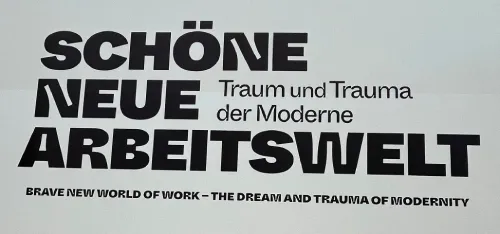
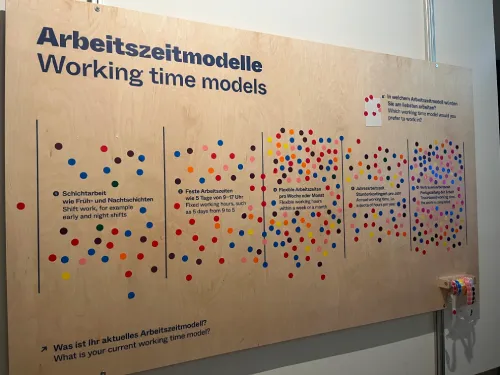
This exhibition reminded me again why museums are so great. I can go years without stepping foot in a museum at times, and some bad and disappointing experiences make it harder to justify it. This one made me happy to go again :)
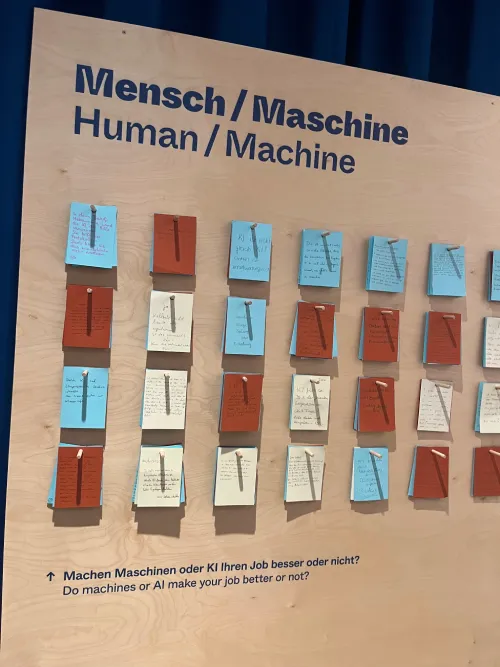
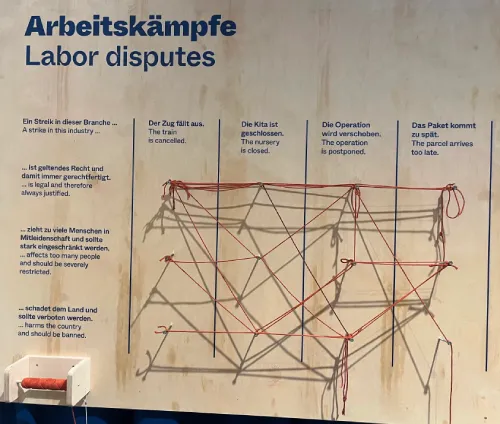
Not only was the art really interesting and inspiring, but the participation options were varied and engaging. Lots of stats, options to discuss, being able to put stickers on what applies to you, rating different activities on whether they qualify as free time or labour by using red or green felt balls, using string to vote on labour strikes, adding your own thoughts on a little paper you stick on a board with questions... it's so cool when museum visitors become part of the exhibition.
I learned about Taylorism too. They had various books and ads in the exhibition that were used to share that model back then. It was praised as revolutionary, as the new way forward... and the optimization was intense. Everything had to be normed and unified, every production step analyzed, broken down and written down... searching Taylorism online shows a very watered down, basic-productivity-type of stuff; it seemed to be much more hardcore in these materials in Germany back then. It wasn't just applied to stuff like building machinery and conveyor belt type work, where this genuinely made some work faster, safer, easier to reproduce, quality higher, but was also imported to the private.
They had a book there was was about "the new way to run the household" which applied Taylorism to the household chores and even the design and layout of the house. They had whole kitchen layouts that were optimized so that the path between different items and kitchen devices was short and not blocked by the table or chairs; the housewife operating like a worker in a factory, learning specific steps and paths by heart to be the most efficient.
It reminded me so much of the culture and language around AI. Ask anyone nowadays and probably no one is doing a taylorist layout of their home or directly referencing Taylorism in their own self improvement journey; still, Taylorism changed work and work culture. Seeing the book saying Taylorism is the new way forward in the home, and knowing how it actually is now, it felt very similar to the marketing around smart homes, and AI bros telling everyone it will run everything, and you should let it run all your personal projects and self improvement or else you'll get left behind both privately and professionally. Pretty interesting!
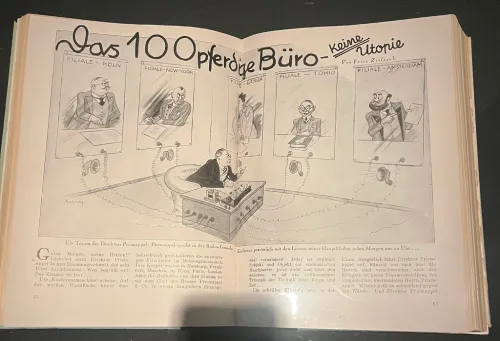
Also, look at this caricature predicting Zoom/Teams calls in 1926 already:
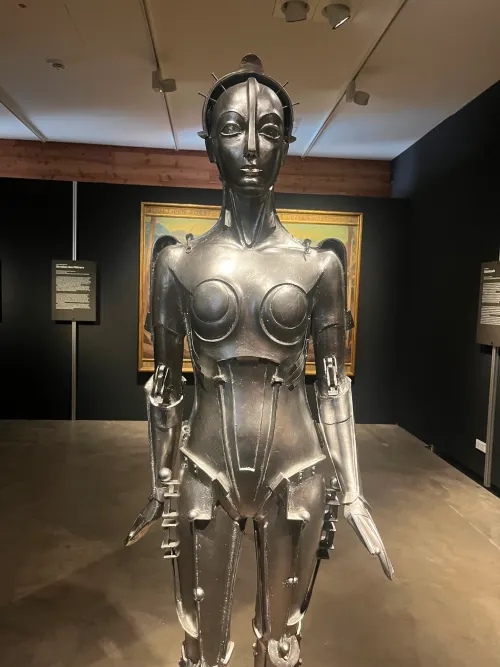
Have some of the interesting explanation signs I saw:
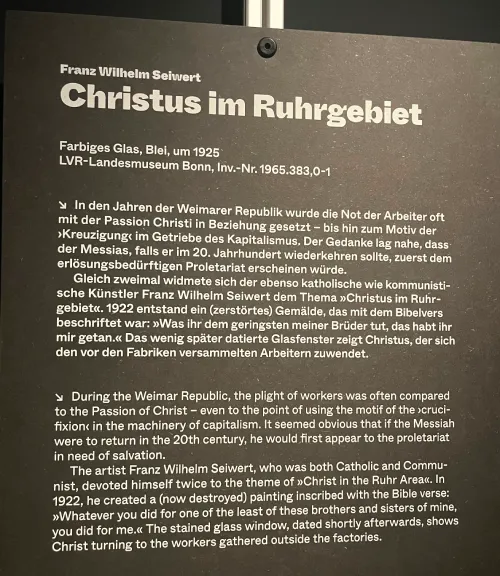
The worker as Christ that is sacrificing himself for capitalism (the glass art not pictured).
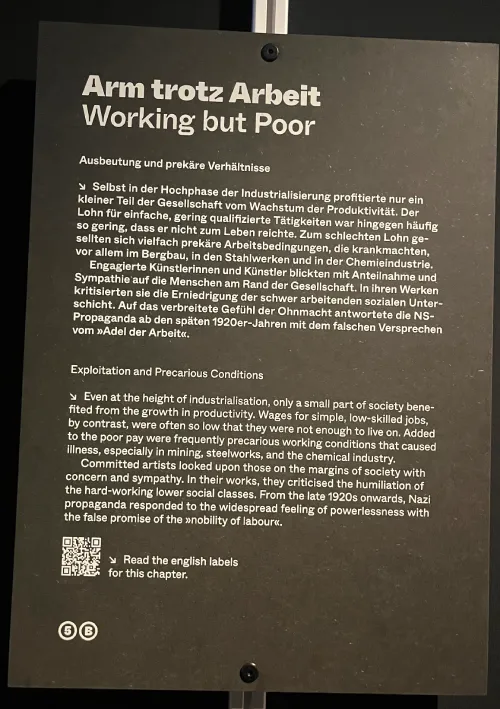
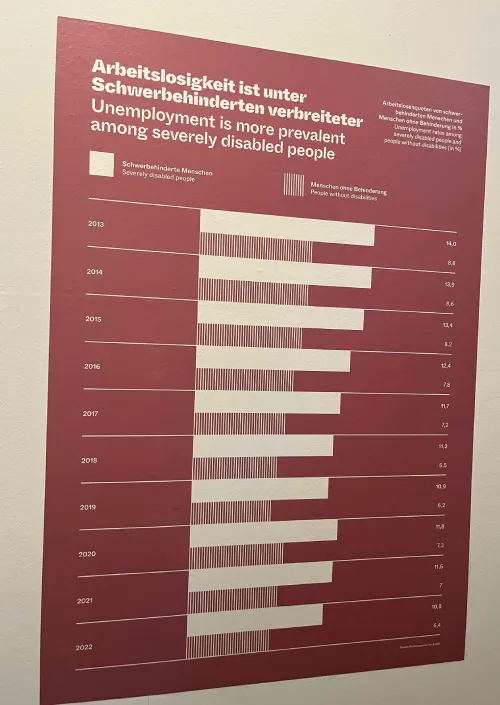
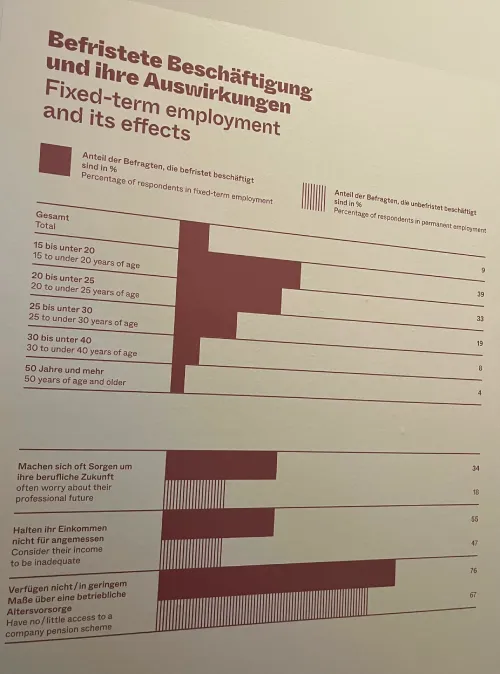
Some stats:
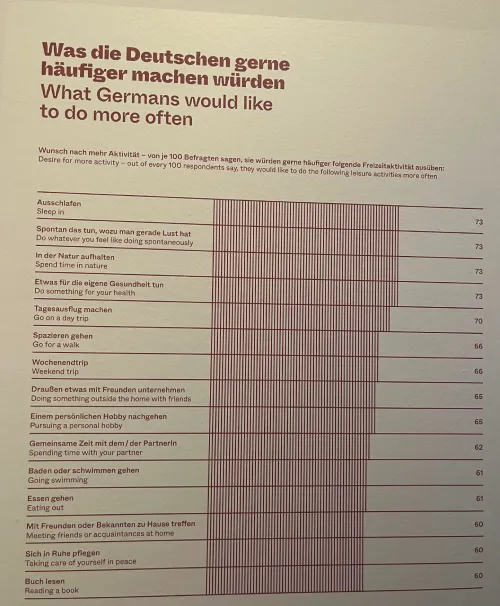
As a surprise to no one, Germans would like to sleep and hike more:
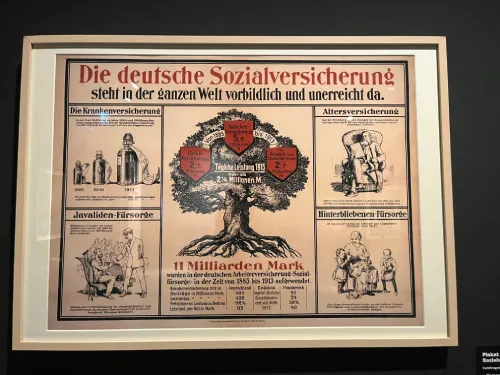
Hurts to see how proud we used to be about our social security systems; the spending was seen as progressive, positive, a sign of wealth and power. Now we starve these systems to death.
We went out to eat after:


expedition weltmeere
I was a little let down by this one because of my own expectations.
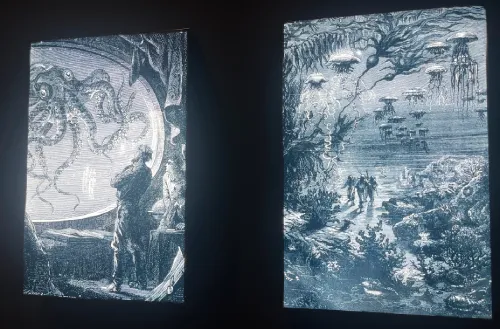
I had expected more focus on the actual ocean, instead of centering the human so hard. It was all: We sent this device down there to do research, we built boats, we use things to cross the ocean, we deliver stories and ideas via crossing the ocean, we make up creepy stories about the ocean; transatlantic slave trade, migration, etc. and some of our impact on destroying the ocean, climate change, overfishing (while not daring to criticize fishing, really, because they don't dare offend the visitors who still eat fish, I guess).
It was depressing, but accidentally so; it didn't feel like they actually wanted to focus on teaching people anything about the ocean itself, or what they can change to not contribute to the issues the ocean faces; it was more a shrine, an altar to human intervention, celebrating oil rigs and the extraction of resources from the ocean. It didn't seem to celebrate the animals and other organisms much beyond just using them to gawk at or eat. So I didn't take many pictures...
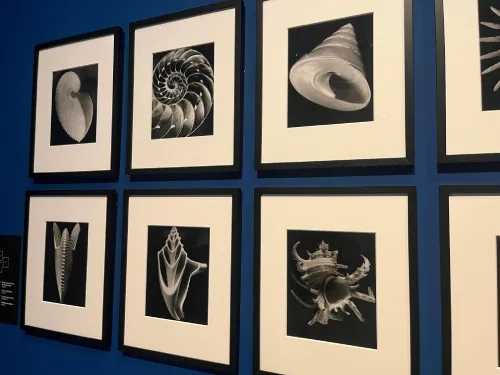
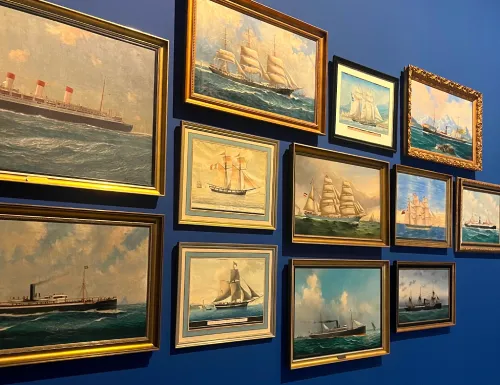
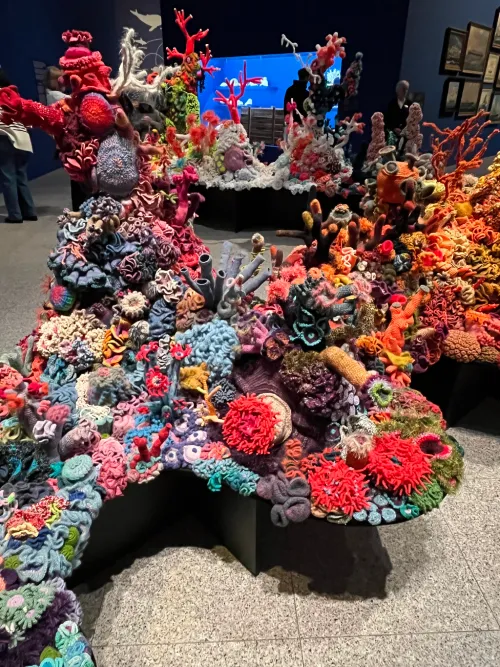
The highlight was definitely the huge yarn corals (bigger than just the part on the picture)
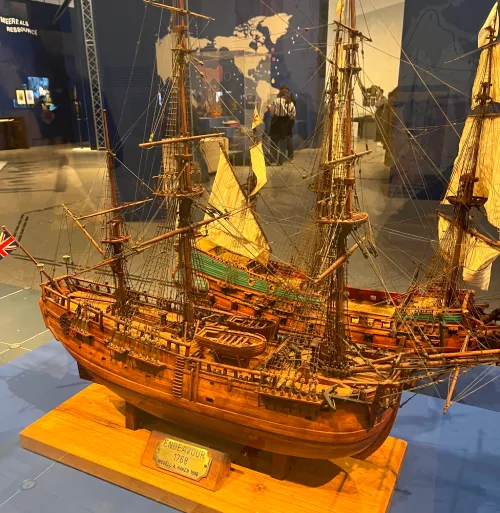
sex work
Next up is the exhibition on sex work!
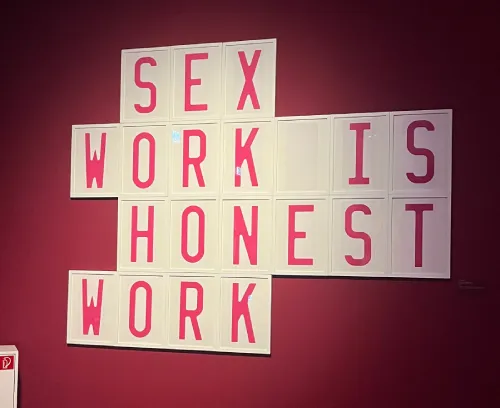
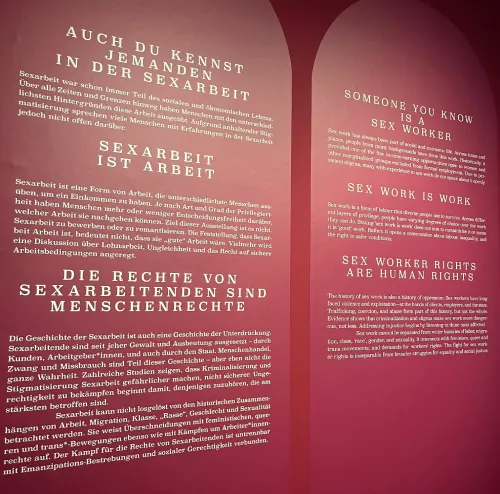
This one was emptier and nicer to visit, and definitely worth it. Beautiful, interesting, very good graphics about legislation around the world, notable sex work spots over the course of history in Germany, big events and personalities in the sex work scene.
I was surprised that digital modes of sex work were mentioned on one text sign and otherwise not shown or discussed; it was very, very focused on street sex work, bars, clubs, brothels.
I think instead of a section covering witches (for some reason?), I'd have appreciated a section on ""modern"" sex work, in which people livestream, sell pictures and videos, and make custom content. OF especially has changed the respectability of some sex work and has enabled many sex workers to do it from the safety of their own home, more comfortable, and reach more customers all around the globe. People who would not otherwise have done sex work now do sex work due to these platforms (even I did, in 2019). I think that deserves to be covered and discussed.
Look at this beautiful but very sad quilt about sex workers facing police violence:
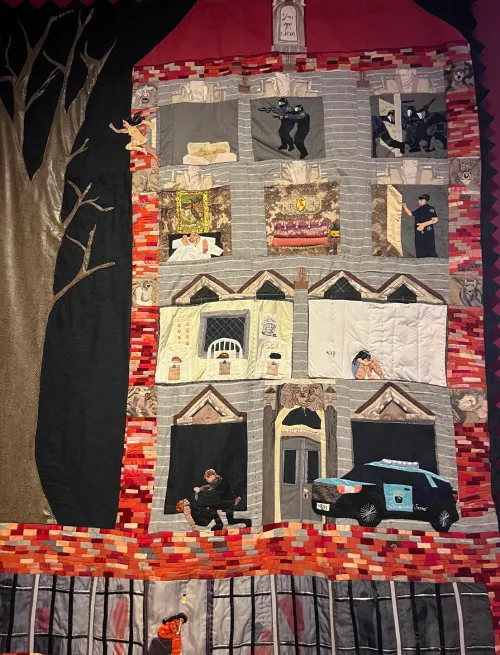
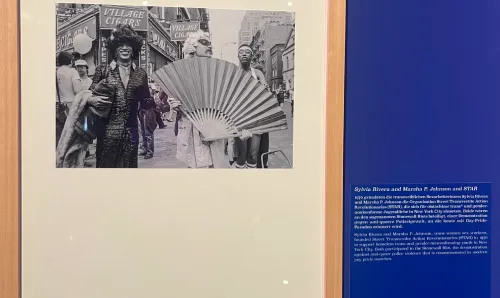
Here's Marsha:
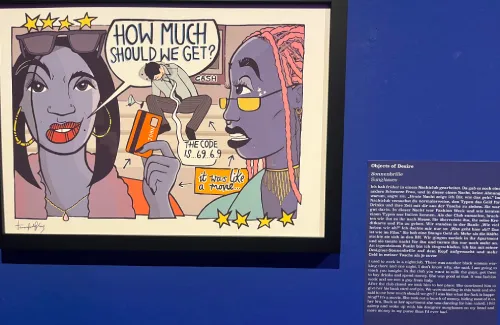
Lots of art had stories included with them. I liked how it humanized sex work and its workers; everyone can relate to weird, funny, odd, dangerous or morally grey work experiences, especially with customers.
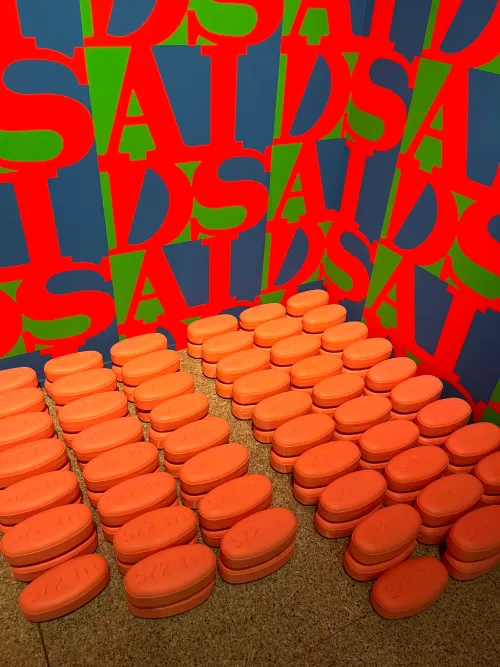
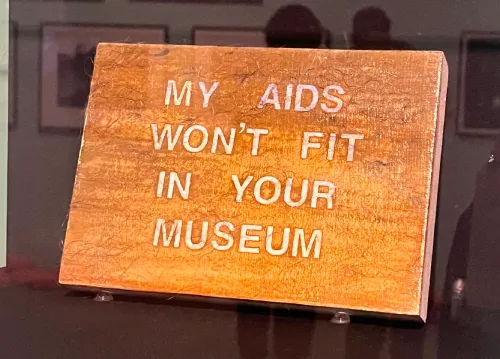
AIDS and Covid are very difficult topics. The distrust in governments due to the AIDS epidemic is justified and it was handled wrongly; and you can see how Covid measures were also used to punish the unwanted, the criminalized, the ones without a lobby. All kinds of companies in a variety of industries got financial support and workarounds to still remain in business, while sex workers were left to fend for themselves; no support, just prohibition. No dialogue with the workers on how to make their work safe, just seeing them as a danger. Covid of course posed different challenges than HIV transmission, but it could have been handled better. It shows you how the government handles crises for people who they cannot milk for money.
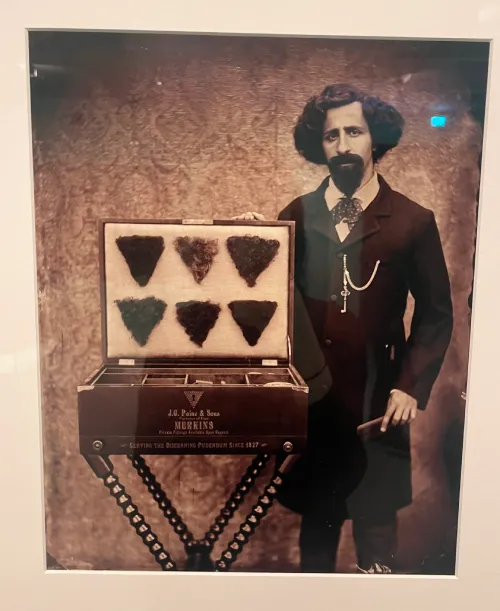
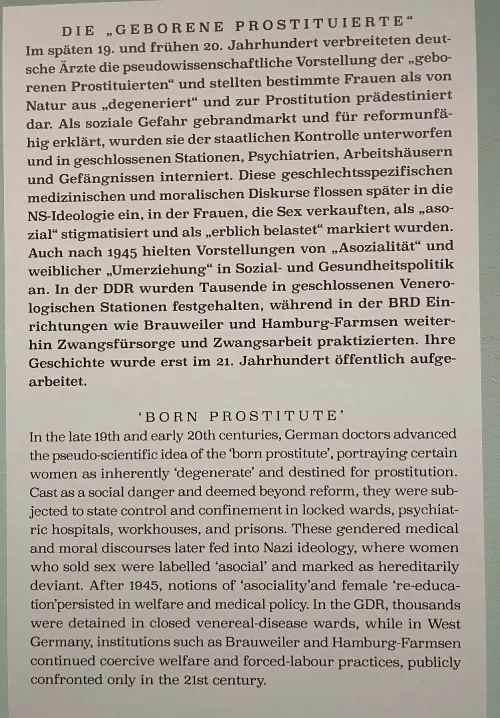
Sex workers are generally disregarded as victims of the Nazis. Of course, sometimes their other identities overlap with groups that were honored and have public memorials (Jewish, Sinti and Roma, queer, disabled etc.) but the part of them that was targeted for their sex work, or people who were only targeted for their sex work and not other parts of their identities never got any justice or memorial. Sex workers were regarded as "asocial" and "degenerate" and institutionalized and were also subject to involuntary hospitalizations, forced labour and more. Just as the NS regime tried to argue for born killers and other supposed sign someone was going to become a criminal or otherwise "undesirable", it argued that some women are just "born prostitutes".
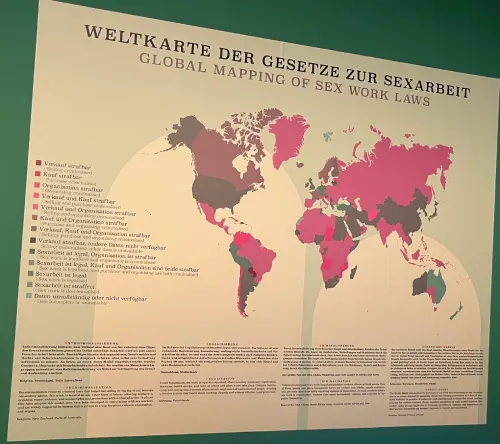
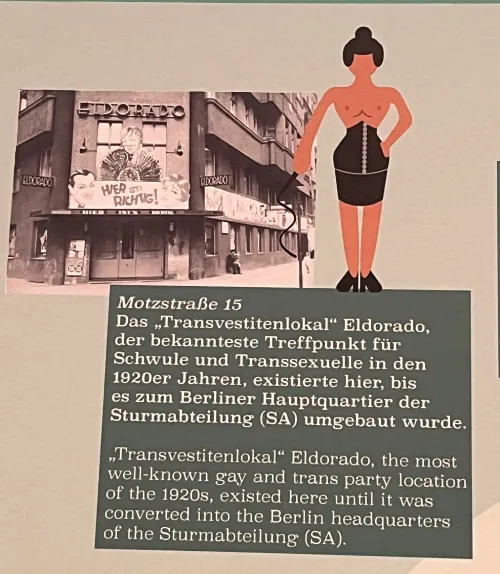
The exhibition had different maps of bigger German cities like Cologne, Hamburg and Berlin and their popular cruising and sex work spots. This piece of info stood out to me: The biggest, most well-known trans and gay bar in Berlin was converted into the headquarters of the SA.
Other than that, the exhibition had some examples of makeshift dildos, the first condoms, and some amazing video interviews. A little chapel with a water fountain serves as a memorial for all the sex workers who have been killed.
Cool that you made it this far.
Reply via email
Published